
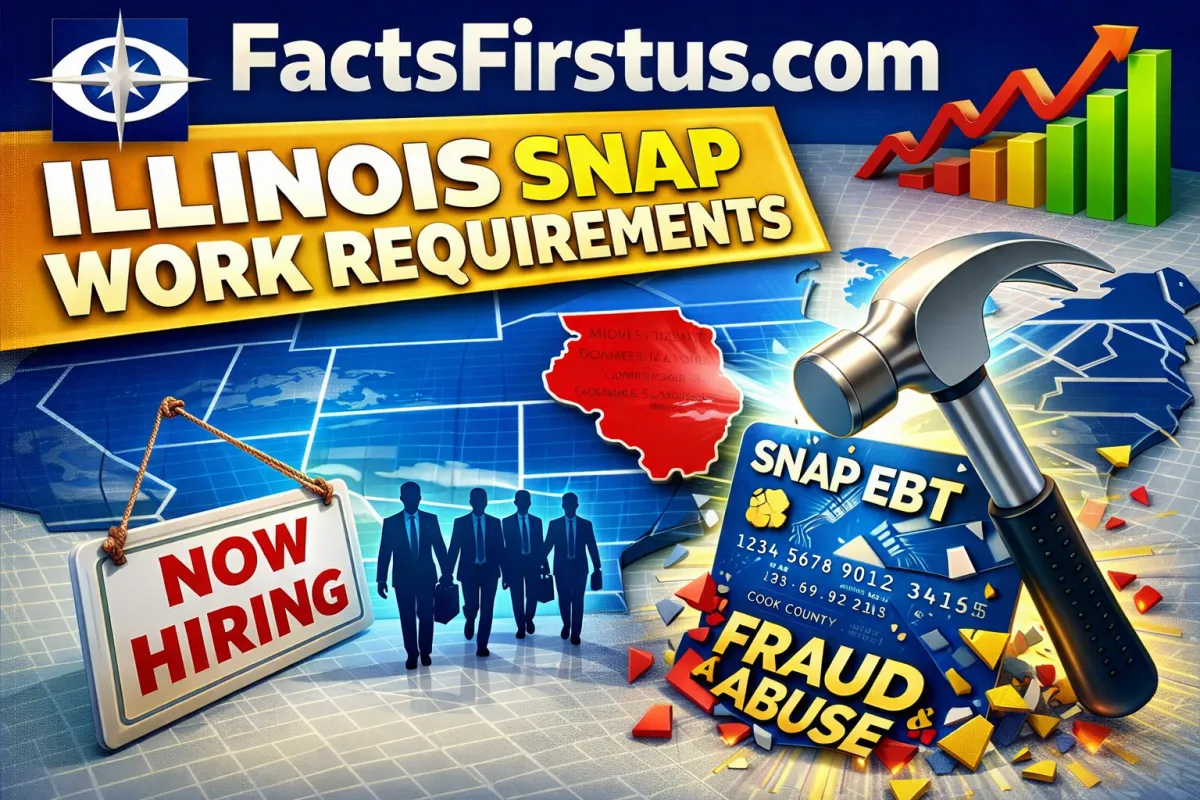
SNAP, FRAUD, AND THE PRICE ILLINOIS PAYS
THE SAFETY NET AND THE TIGHTROPE
How SNAP lost its balance — and why Illinois stands at the center of its reckoning
By Staff Writer
January 29, 2026
At 6:12 a.m., the lights flicker on in a small grocery store on the south side of Springfield. The doors won’t open for another hour, but the owner is already counting inventory, doing math in his head he’s done a hundred times before.
He’s short two employees. Again.
Across town, a single mother scrolls her phone at the kitchen table, wondering how she’ll stretch her SNAP benefits to the end of the month. She works. She always has. But the numbers never quite work.
And somewhere between those two realities — hunger and help, work and dependence — sits one of the most important, misunderstood, and contested programs in America: SNAP.
What SNAP Was Meant to Be
SNAP — the Supplemental Nutrition Assistance Program — exists for one simple, moral reason: no one in America should go hungry.
It provides food assistance to children, seniors, veterans, people with disabilities, and working families whose paychecks don’t stretch far enough. In Illinois alone, nearly 2 million people rely on SNAP at some point during the year. It keeps food on tables, kids focused in school, and seniors out of crisis.
SNAP is not charity.
It is not welfare in the old caricatured sense.
It is a temporary bridge — meant to help people stand back up, not settle in.
And that distinction matters.
“A safety net is meant to catch you — not hold you there.”
When the Net Became a Hammock
Over time, SNAP drifted.
Work requirements weakened. Waivers expanded. Oversight became inconsistent. And in states like Illinois, fraud, abuse, and administrative failure quietly grew — not always in dramatic scandals, but in small, compounding ways that add up to millions of dollars and thousands of missed opportunities.
Able-bodied adults without dependents remained on SNAP for years without working, training, or volunteering — even as businesses across Illinois posted Help Wanted signs they couldn’t fill.
This wasn’t compassion.
It wasn’t justice.
And it wasn’t fair — to taxpayers, to employers, or to the people SNAP was designed to help.
Because every dollar lost to fraud is a dollar not feeding a hungry child.
Every rule ignored weakens public trust.
Every able-bodied adult left disconnected from work loses more than income — they lose dignity.
February 1, 2026: The Line Gets Redrawn
On February 1, 2026, the rules change.
Under new federal law — strengthened through the One Big Beautiful Bill Act of 2025 — SNAP work requirements expand nationwide, including in Illinois. The shift is clear, firm, and overdue.
Able-bodied adults ages 18–54 without dependents must now work, train, or volunteer at least 80 hours a month to receive SNAP beyond three months in a three-year period — unless they qualify for clear, humane exemptions.
These include:
People with physical or mental limitations
Pregnant women
Veterans
Individuals experiencing homelessness
Parents or caregivers of minors
Young adults aging out of foster care
This is not a rollback of compassion.
It is a restoration of purpose.
“Work requirements are not punishment — they are a promise.”
Why Illinois Should Care — Deeply
Illinois is ground zero for this debate.
For years, the state has struggled with SNAP errors, penalties, and enforcement gaps, placing taxpayers on the hook and eroding confidence in the program. At the same time, small businesses — restaurants, retailers, manufacturers — have been bleeding workers.
When able-bodied adults return to the workforce:
Small businesses can stay open
Service improves
Communities stabilize
Families gain independence
SNAP dollars stretch further for those who truly need them
This isn’t theory. It’s economics. It’s dignity. It’s common sense.
A working SNAP system helps people move forward, not stay stuck.
The Human Impact — Where Policy Becomes Real
Picture a man in Decatur who hasn’t worked in three years, not because he can’t — but because the system never asked him to try. Under the new rules, he enrolls in SNAP Employment & Training. He learns skills. He gets hired.
Picture a café owner in Peoria who finally staffs her morning shift fully for the first time since the pandemic.
Picture SNAP benefits preserved for the disabled, the elderly, and the working poor — because fewer dollars are wasted.
That’s not cruelty.
That’s restoration.
This Is Why Every Illinoisan Should Care
You should care if:
You believe help should go to those who need it most
You believe work matters — not just economically, but morally
You believe public trust is worth protecting
You believe dignity comes from contribution
SNAP works only when it works honestly.
And now, it has a chance to again.
Learn More. Apply. Stay Informed.
For official guidance on SNAP eligibility and work requirements — including how to apply or comply — visit the U.S. Department of Agriculture, Food and Nutrition Service:
https://www.fns.usda.gov/snap/work-requirements
This is the authoritative source for rules, exemptions, and updates.
The Bottom Line
SNAP is not being dismantled.
It is being defended.
Defended from abuse.
Defended from erosion.
Defended so it can endure.
“A strong safety net requires strong standards.”
Illinois deserves a SNAP program that feeds the hungry, rewards effort, restores dignity, and strengthens communities.
February 1, 2026 isn’t the end of compassion.
It’s the moment we finally demanded responsibility walk alongside it.
Official Sources
U.S. Department of Agriculture, Food and Nutrition Service — SNAP Work Requirements
https://www.fns.usda.gov/snap/work-requirementsIllinois Department of Human Services — SNAP Fraud and Program Integrity
Federal SNAP statutes and ABAWD work requirement guidance