
THE LAW THAT COULD CHANGE YOUR NEIGHBORHOOD FOREVER
WHEN THE PLACE YOU CHOSE ISN’T THE SAME ANYMORE
How Illinois HB 1429 could quietly reshape parks, lake communities, neighborhoods, and the shared spaces people worked their lives to enjoy
By FactsFirstUS Editorial Board
April 17, 2026
There is a moment most homeowners remember.
It is not the closing paperwork or the moving boxes. It is the first quiet evening when everything finally settles. You look around and think, this is ours.
Not just the house, but the life around it.
The street you chose carefully.
The neighbors you hoped for.
The park nearby where your kids can run without you worrying.
The lake where mornings feel calm and familiar.
The quiet neighborhood where people walk, talk, and feel at ease.
That decision is never accidental. It comes from years of work, saving, and saying no to things so you can one day say yes to this.
Now imagine that same place a year later.
Not abandoned. Not destroyed overnight. Just different.
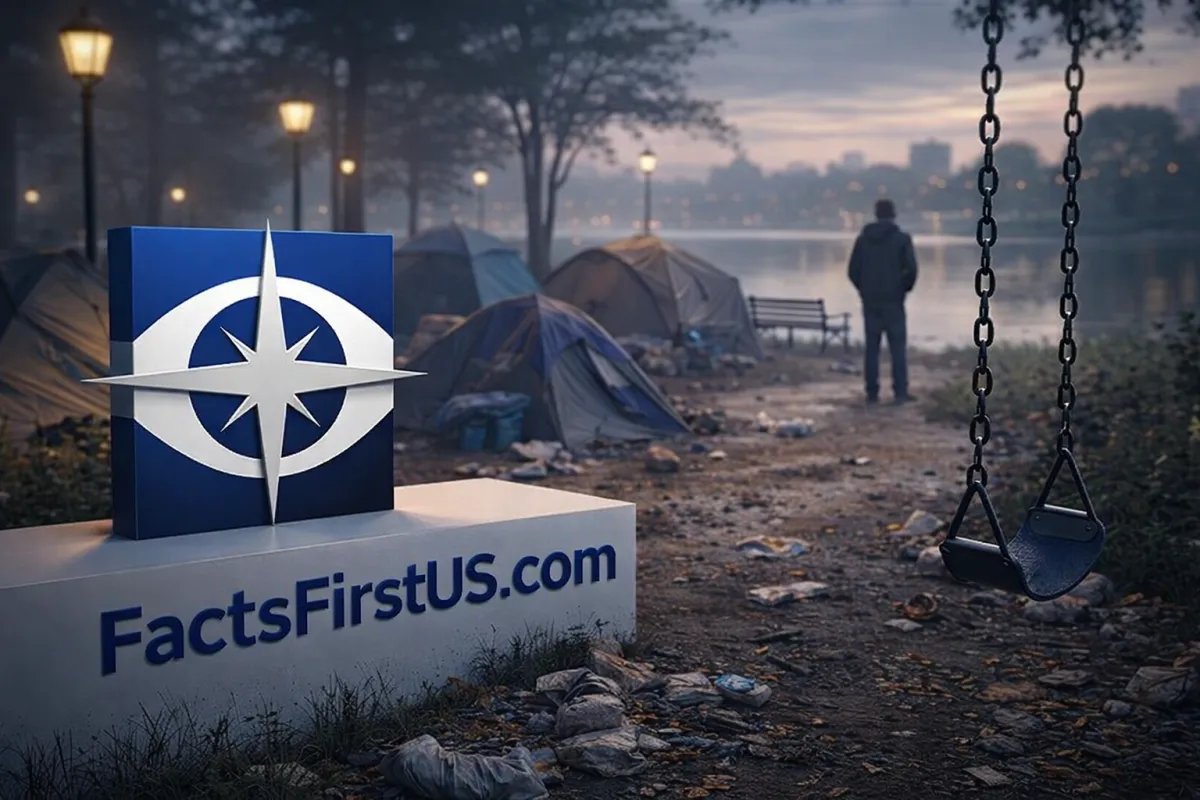
A few tents at first. Then more. Belongings stacked along the edges of spaces that were once shared. Trash that no longer gets picked up the way it used to. Areas people once gathered begin to feel uncertain.
A swing moves slightly in the wind, but no one is using it.
A lakeside bench sits empty longer than it used to.
A walking path that once filled up in the evening grows quieter.
Nothing dramatic happens all at once. That is what makes it harder to talk about.
It changes slowly, and then all at once it feels like something important is gone.
Illinois House Bill 1429 would make that kind of change harder for communities to stop.
The bill would prevent local governments from enforcing restrictions on what it defines as “life sustaining activities,” including sleeping, resting, and storing personal belongings in public spaces.
That includes parks, but it does not stop there. It extends to public spaces throughout neighborhoods, lake communities, and shared areas people rely on every day.
It would also take away the ability of towns, cities, and local districts to create and enforce their own rules.
On its face, the language sounds careful. Reasonable. Difficult to argue against.
And that is where the conversation deserves a closer look.
“Life sustaining activities” sounds reasonable. It softens what the policy allows and makes it easier to accept.
But Illinois has seen this approach before.
When minimum wage increases were pushed, the phrase used was “living wage.” It sounded fair, necessary, and difficult to oppose. Over time, many small businesses struggled to absorb the rising costs. Some reduced hours. Some cut staff. Others closed quietly, leaving behind empty storefronts that had once been part of the community.
The wording helped pass the policy. The consequences were something else entirely.
Policy is not measured by how it sounds when it is passed. It is measured by what it leaves behind.
For many communities, this is not a small adjustment. It is a fundamental shift in who controls public space and how it is used.
This is not uncharted territory.
In parts of California, policies that limited enforcement and allowed encampments to grow led to visible and lasting changes. Parks, beaches, and public gathering areas that once served families became lined with tents. Trash accumulated. Needles and human waste were reported in areas that had once felt safe for everyday use. Businesses nearby saw fewer customers. Some adjusted their hours. Others closed altogether.
These were not isolated places. They were the same kinds of public spaces people once trusted without thinking twice.
Once that shift begins, it rarely stays contained.
Even in those states, there has been a change in direction.
After years of dealing with the consequences, some cities have begun clearing encampments and trying to restore public spaces. The issue was never whether people cared. It was whether the approach actually helped.
The cost has been significant. In some cities, cleanup efforts have reached into the millions. In states like California, the broader response to homelessness and encampments has cost billions in taxpayer dollars, much of it spent trying to undo conditions that developed after policies that once sounded reasonable were put in place.
Allowing people to remain in public spaces did not solve homelessness. In many cases, it made it harder to address.
Illinois is already under pressure.
Across the state, people are seeing changes they did not expect just a few years ago.
In Springfield, residents talk about street corners where individuals now stand for long stretches of the day, sometimes stepping into traffic to get the attention of passing cars. In parts of downtown, business owners have quietly adjusted hours or closed earlier, not because they want to, but because the environment no longer feels the same after dark.
On the east side of the capital city, it is not uncommon to see people lingering near storefronts and entryways, creating an atmosphere that makes some customers hesitate before walking in. Business owners are left trying to manage situations they were never meant to handle, while also trying to keep their doors open.
These changes are not always dramatic. They build over time.
In many cases, the response feels inconsistent. Communities are left balancing concern for those struggling with the reality that the situation is affecting the people who live and work there every day.
In towns across Illinois, familiar places are changing, sometimes slowly enough that it is hard to point to a single moment when it happened.
And once those patterns take hold, they are not easily reversed.
When shared spaces change, businesses often feel it first.
Then the neighborhood follows.
The concern many residents have is not rooted in a lack of compassion.
It is the belief that real solutions should do more than move a problem from one place to another. They should address why it exists in the first place.
This bill does not exist in a vacuum.
Illinois has a Democratic supermajority with the ability to pass legislation with little resistance. For many voters, party alignment has become a deciding factor, sometimes outweighing the long-term impact of the policies themselves.
Policy is not defined by how it is described. It is defined by what happens after it is put in place.
Other states have already shown how this can unfold.
The question is why Illinois appears to be moving in the same direction.
For homeowners, this becomes personal.
You made decisions based on what a place was. You invested in it. You trusted that the community around you would be protected and maintained.
If that can be changed by a policy passed far from your neighborhood, without your local leaders being able to respond, what does that mean for the future of the place you chose?
And that is where this stops being theoretical.
At some point, words are no longer enough. Voters will have to decide whether they are comfortable continuing to support policies based on how they sound, or whether the outcomes finally matter more. Because if HB 1429 becomes law, what happens next will not be an accident or an unintended consequence. It will be the predictable result of choices that were made, supported, and repeated. This pattern has already played out elsewhere, and it does not end differently simply because we hope it will. Parks will change. Lakefronts will change. Neighborhood spaces will change. Communities will feel it. Businesses will struggle or disappear. And the people who worked their entire lives to build something stable will be the ones left to absorb the cost. Ignoring that reality does not soften the impact. It ensures it.
Sources
Illinois HB 1429 summary and provisions