
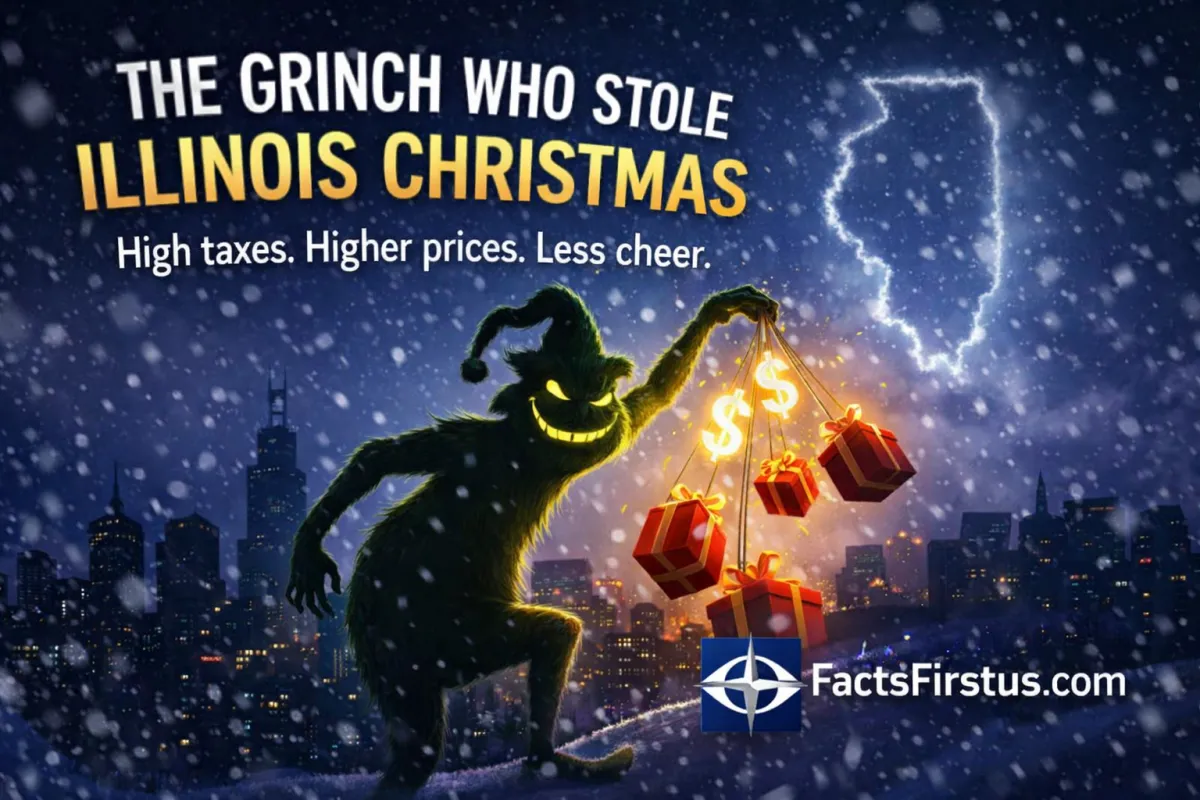
HOLIDAY CHEER, ILLINOIS FEAR
Bah, Humbug: Holiday Shopping With a Side of Sales Tax
In Illinois, even the cheer comes with a surcharge
Staff Writer — December 17, 2025
It’s supposed to be the most wonderful time of the year. Instead, in Illinois, the holidays arrive with a familiar companion: a receipt that quietly asks if you’re sure you needed that last gift.
Across the state, shoppers face some of the highest combined sales tax rates in the country. Illinois’ average statewide sales tax rate now sits at about 8.9%, ranking eighth highest nationwide—a figure that reflects not just the state’s base tax, but layer upon layer of local add-ons that quietly inflate the final bill.
“Buy the gift. Brace yourself for the total.”
The effect is felt everywhere. Whether it’s winter coats bought in Peoria, toys picked up in Rockford, or online orders shipped to rural counties, Illinois consumers consistently pay more at checkout than shoppers in most other states. While rates vary by municipality, many communities push well beyond 9%, and some climb into double digits.
Chicago draws the most attention — and not unfairly. At 10.25%, the city’s current sales tax is already among the highest of any major U.S. city. But this is not just a Chicago story. A recently approved 0.25% Regional Transportation Authority sales tax increase is expected to affect six counties — Cook, Lake, McHenry, Kane, DuPage, and Will — home to nearly two-thirds of Illinois’ population. If implemented, rates across much of northeastern Illinois will rise again in 2026.
“Because nothing spreads holiday cheer like taxing two-thirds of the state.”
The timing is hard to ignore. The National Retail Federation projects U.S. holiday spending will exceed $1 trillion in November and December 2025, setting a new record. But analysts caution that higher spending doesn’t necessarily mean higher enthusiasm. According to Accenture’s annual holiday shopper survey, much of the increase reflects higher prices, not fuller carts.
Add sales taxes to already-inflated prices, and the math gets uncomfortable fast.
Illinoisans feel it. A recent statewide poll found high taxes rank as voters’ No. 1 concern, reflecting fatigue with a strategy that leans heavily on consumers to fund ever-expanding public spending. Supporters of higher sales taxes argue the revenue supports essential services like public transit.
And sure — who could argue with that?
“After all, what better way to celebrate the season than paying more for socks today so someone else might ride a train tomorrow?”
For shoppers, the result is predictable: tighter budgets, harder choices, and a growing sense that the holidays in Illinois come with a built-in surcharge. Strong consumer spending may signal economic resilience, but when it’s fueled by higher prices and higher taxes, it also signals something else entirely.
In Illinois, even the joy of giving gets taxed.
Sources
National Retail Federation
Accenture 19th Annual Holiday Shoppers Survey
Illinois Policy Institute
Illinois Department of Revenue
Sales Tax Handbook