
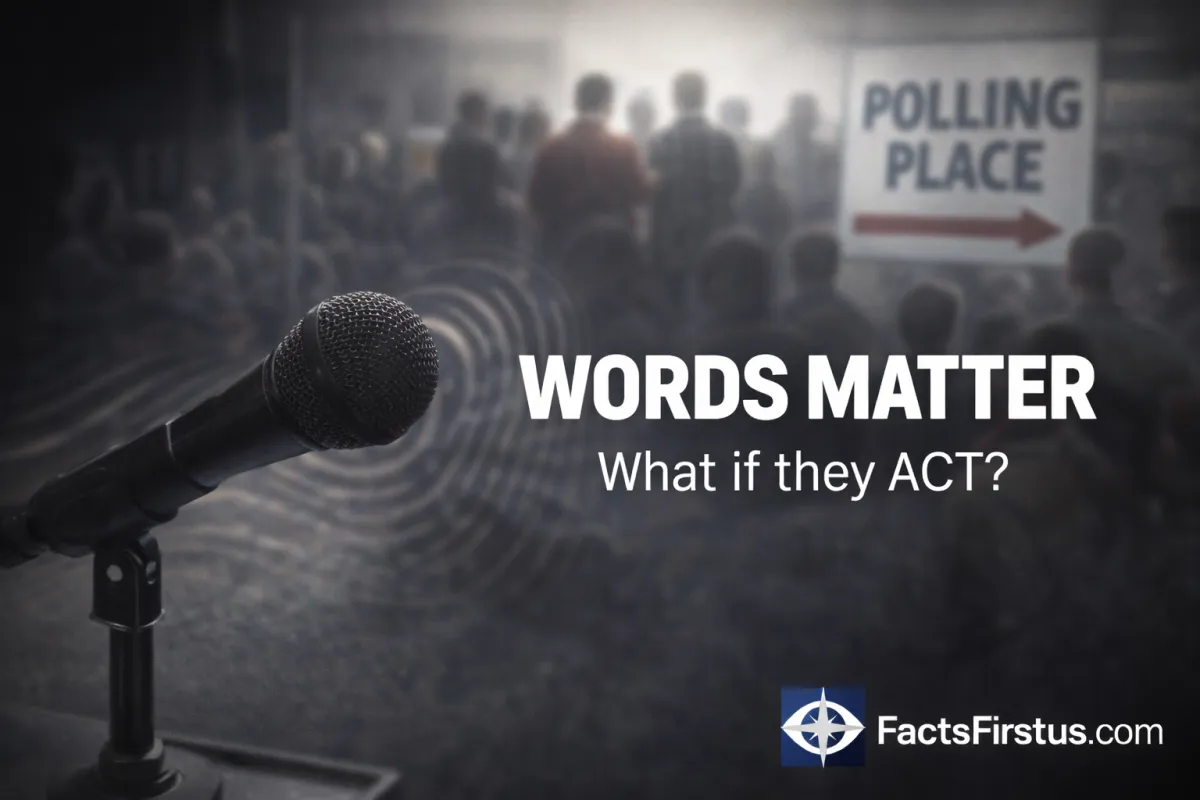
PRITZKER SPARKS OUTRAGE: GOVERNOR ACCUSED OF ENCOURAGING CONFRONTATION AT POLLING PLACES
PRITZKER CROSSES THE LINE: GOVERNOR’S RHETORIC SPARKS FEARS OF CHAOS AND CONFRONTATION AT THE POLLS
As Election Day approaches, a governor’s words are raising urgent questions about public safety, election integrity, and the consequences of escalating political rhetoric.
By Staff Writer
April 10, 2026
With just seven months until Illinois voters head to the polls, Governor JB Pritzker has ignited a firestorm, one that is no longer confined to politics alone.
Speaking Thursday at Rev. Al Sharpton’s National Action Network Conference in New York, Pritzker made remarks that are now drawing intense scrutiny across the political spectrum.
“We need to go with purpose and push them out of the way or at least tell them to get out of the way, and go in and vote.”
Pritzker’s stated intent was to protect voters from potential intimidation. But for many, that is not what stood out.
What stood out was the language.
For critics, this was the moment the conversation changed. Not just rhetoric. Risk.
“We won’t have any more elections. We have to fight like hell to preserve those rights.”
Even some who generally support the governor have begun to question the tone. They may share concerns about voter access, but they are expressing discomfort with words that could be interpreted as encouraging confrontation in places where order is essential.
Polling places are not protest zones. They are controlled environments governed by strict rules designed to prevent intimidation, confusion, or conflict.
Encouraging voters to “push” past law enforcement introduces a different dynamic entirely.
If even one person takes that message literally and confronts federal agents at a polling place, the situation could escalate in seconds. What begins as a dispute could quickly turn into a physical incident involving voters, poll workers, and law enforcement.
That is not a political concern. It is a public safety concern.
A governor should calm tensions, not inflame them.
Words from a governor do not stay words for long.
At the same time, the state is facing ongoing legal challenges tied to election transparency.
Federal investigators and watchdog groups have sought access to Illinois voter rolls as part of broader efforts to examine voter eligibility. Under federal law, authorities have the ability to review voter registration records, and similar efforts in other states have led to the identification of deceased individuals and others who were no longer eligible to vote remaining on the rolls.
Illinois officials have resisted providing that access, citing legal and privacy concerns. There has been no finding of wrongdoing.
But for critics, that is not reassuring.
They argue that the absence of a finding is a direct result of the lack of full access. Without the ability to examine the records, investigators cannot determine whether the voter rolls are accurate or identify potential issues if they exist.
That is where the concern deepens.
Opponents contend that maintaining accurate voter rolls is a basic safeguard of election integrity. They argue that allowing independent review, or taking additional steps to ensure those rolls are current and accurate, would strengthen public confidence in the system.
Instead, they see resistance.
And in a state that has long carried a reputation, fairly or unfairly, for political corruption, that resistance raises difficult questions for many voters.
If other states have allowed review and uncovered problems that required correction, critics ask, why should Illinois be treated differently?
For them, the issue is not simply about proving wrongdoing. It is about demonstrating transparency.
Because trust in elections is not built on assurances alone. It is built on verification.
Illinois has already been navigating years of tension with federal authorities over immigration enforcement. Sanctuary policies, including the TRUST Act, have limited cooperation with federal agencies, creating ongoing friction.
When enforcement actions have increased, those tensions have not remained theoretical. Protests have followed. Confrontations have occurred. Divisions have deepened.
Now, critics warn that the same tensions could move closer to polling places.
Republican challenger Darren Bailey has pointed directly at the governor’s leadership, arguing that both policy decisions and public statements are contributing to instability.
“We don’t need federal agents in the state of Illinois. We could have been dealing with this with state and local law enforcement, had JB Pritzker not gotten in the way.”
Beyond campaign arguments, the broader concern remains.
Polling places are meant to be neutral ground. They are one of the few spaces where political conflict pauses so citizens can participate without fear or interference.
When that expectation begins to erode, the consequences extend far beyond a single election.
Supporters of the governor may view his remarks as a defense of voting rights. Critics see a line crossed, one that introduces unnecessary risk at a moment when tensions are already high.
What is clear is that the tone has changed.
And when tone changes at the top, behavior often follows.
Because rhetoric like this does not stay confined to speeches. It moves into real spaces, real moments, and real interactions.
When leaders normalize confrontation in places meant for peaceful participation, the risk is no longer political.
It is physical.
And once that line is crossed, it cannot be easily undone.
The question now is not just what was said.
It is what happens if people act on it.
Sources:
Patch.com, April 10, 2026
Chicago Tribune, April 9, 2026
CBS Chicago, March 18, 2026
U.S. Department of Homeland Security statements
National Action Network Conference coverage, Associated Press and Washington Times
Public legal filings regarding voter roll access and election transparency