
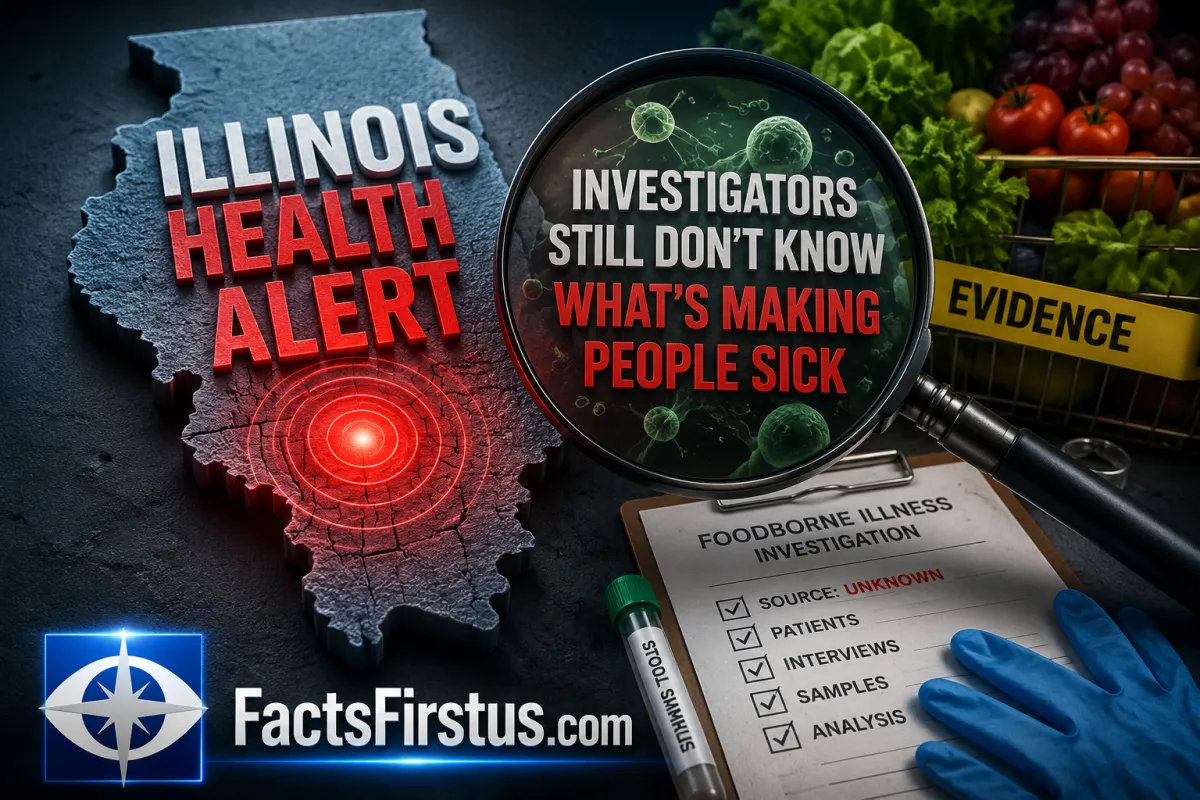
ILLINOIS HEALTH ALERT: INVESTIGATORS STILL DON'T KNOW WHAT'S MAKING PEOPLE SICK
THE ILLINOIS OUTBREAK INVESTIGATORS CAN'T YET EXPLAIN
People are getting sick. The illness has been identified, but the contaminated food responsible remains a mystery. Illinois health officials are urging residents to know the warning signs, understand who's most at risk, and seek medical care if symptoms develop.
By Staff Writer | July 11, 2026
SPRINGFIELD — Illinois families are being asked to pay attention.
Health officials are investigating a foodborne illness that has reached Illinois, and while doctors know the parasite responsible, they still have not identified the contaminated food that caused the outbreak.
That uncertainty is why federal and Illinois health officials continue working to trace where the illnesses began and whether additional cases can be prevented.
For Illinois residents, the questions are straightforward.
Is my family at risk?
What symptoms should I watch for?
And if someone gets sick, what should they do?
Those are the same questions investigators are working to answer.
The illness is caused by Cyclospora, a microscopic parasite that infects the small intestine. Illinois was among the states reporting higher early case totals as the investigation began, and while confirmed illnesses have since been reported in many other states, Illinois continues to be part of the ongoing investigation as officials search for a common source.
The challenge is that Cyclospora doesn't behave like most foodborne illnesses.
Unlike bacteria that often cause symptoms within hours, Cyclospora usually waits about a week before making someone sick. Sometimes it takes even longer.
That delay creates a race against time.
By the time an Illinois resident begins feeling ill, the salad may already be gone.
The fruit has been eaten.
The grocery receipt may have been thrown away.
Even remembering exactly what was served several days earlier can become difficult.
For investigators, every patient interview becomes an attempt to recreate meals from the previous week.
Every grocery purchase is another clue.
Every restaurant visit matters.
Somewhere in those details is the answer investigators have been searching for.
"It might be something you ate a week ago. When people get sick, they like to think about what they ate the night before. Often with this, it's not last night's takeout."
— Dr. Jeremy Smiley, Endeavor Health
While investigators continue their work, Illinois health officials say residents should know what to watch for.
The most common symptom is severe watery diarrhea that can become frequent and prolonged. Other symptoms include stomach cramps, nausea, bloating, fatigue, loss of appetite, weight loss, vomiting, headaches, body aches, increased gas, and sometimes a low-grade fever.
Unlike many stomach viruses, Cyclospora may last for weeks if it is not treated.
Health officials recommend contacting a healthcare provider if diarrhea is severe, lasts more than a few days, or is accompanied by signs of dehydration. Because Cyclospora is not detected through every routine stool test, healthcare providers may need to specifically request testing if the parasite is suspected.
Treatment is available, and early diagnosis can help shorten the illness.
Anyone can become infected, but older adults, young children, pregnant women, and people with weakened immune systems are more vulnerable to complications from prolonged diarrhea and dehydration. The encouraging news is that Cyclospora is rarely fatal, and no deaths have been reported in the current outbreak.
Investigators have not identified the contaminated food responsible. Previous Cyclospora outbreaks have been linked to fresh produce such as leafy greens, cilantro, basil, raspberries, snow peas, and green onions, but health officials emphasize that none of those foods has been identified as the source of this investigation.
Until more answers are available, Illinois residents can reduce their risk by washing fruits and vegetables thoroughly, washing their hands before preparing food and before eating, preventing cross-contamination in the kitchen, and seeking medical care if symptoms develop.
For now, the investigation continues.
Illinois health officials know what illness they're fighting.
They know how it spreads.
They know treatment is available.
What they are still trying to determine is the one missing piece that could help prevent additional illnesses.
The contaminated food responsible.
Until that answer is found, Illinois families are encouraged to stay informed, recognize the warning signs, and not ignore symptoms that could be more than just a routine stomach bug.
Official Sources
Centers for Disease Control and Prevention (CDC)
Illinois Department of Public Health (IDPH)
U.S. Food and Drug Administration (FDA)
CDC Cyclosporiasis Surveillance and Clinical Guidance
Endeavor Health interview with Dr. Jeremy Smiley (FOX 32 Chicago)